TrainingBuilding
Form Follows Fitness
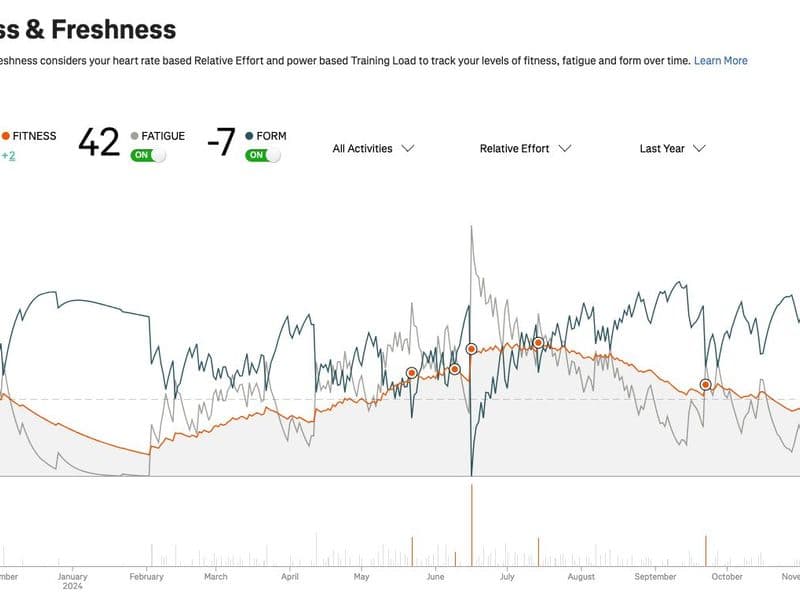
Fitness, fatigue, and form. The three metrics that changed how I train. Here is how understanding Strava's Fitness and Freshness model saved me from b...
4 min readDarren Zwiers
New to endurance training or keep finding yourself injured? Here is why recovery matters more than you think, and why the no pain no gain mindset nearly broke me.

New to endurance training or keep finding yourself injured? Here is why recovery matters more than you think.
Over the past few months, I have been connecting and chatting with a lot of new and budding athletes, especially runners and cyclists. One thing I have noticed is that many newcomers to endurance sports are laser focused and excited about training progress and have a misconception about getting fitter by pushing harder. But when the topic of recovery comes up, it is often overlooked or not really considered.
I totally get it! I was the same when I first started not too long ago. I am an all or nothing type of guy. I used to believe that the harder I trained, the faster I progressed. No pain, no gain, right? But that mindset eventually caught up with me. I pushed too hard, fell into fatigue, and overtrained. My nervous system was constantly fried, and instead of progressing, I was forced into a long term recovery period.
I want to help you avoid making these costly mistakes as our health and happiness should be our priority. The activities we love are meant to keep us healthy and feeling good, so there is no point in pushing to the point where they break our bodies and minds.
The important thing you need to tell yourself right now is that recovery is not about being lazy or skipping training. It is where the real magic happens.
When you train, you are creating stress on your body. This stress breaks down muscle fibers, drains your energy stores, and what most people forget, taxes your nervous system. Recovery is when your body repairs, adapts and becomes stronger. Without enough recovery, your body never fully rebuilds, leading to fatigue, poor performance, and even injury.
Think of your body like a phone battery. Every workout drains the battery. If you never stop to recharge, the battery runs out entirely. Recovery is how you recharge so you can show up stronger for the next session.
Pushing harder without proper recovery may feel productive in the short term, but it often leads to long term issues. Fatigue becomes constant, making even easy sessions feel difficult. Your risk of injury skyrockets because your body has not had the chance to repair correctly. Mental burnout can creep in too, leaving you unmotivated and frustrated with the lack of progress.
The truth is short term gains often come at the expense of long term health and consistency. It is important to learn that building endurance fitness is a long game, and prioritising recovery ensures you can keep progressing sustainably for years. It is not about working harder. It is about working smarter.
Real progress comes from the balance between effort and recovery.
Recovery is not just about doing nothing and resting on the couch, although sometimes that is needed too and you should never feel guilty about doing it! It is about giving your body the right conditions to repair and grow stronger.
Active recovery (gentle, low intensity movement) can involve walking, stretching, or yoga, keeping blood flowing without stressing your body.
Quality sleep is the real powerhouse tool. Seven to nine hours of uninterrupted rest is when most physical repair happens. This is your ultimate superpower!
Proper nutrition is essential too, because your body requires protein to rebuild muscles, carbohydrates to replenish energy stores, and healthy fats for overall well being.
Staying hydrated is also crucial, as water plays a vital role in muscle repair and energy production.
Rest days are equally essential. Taking an entire day off is not a setback. It is part of a sensible training plan. Your body needs time to absorb the benefits of your hard work.
Think of training and recovery as a partnership. They work best when balanced together. Following a structured plan that includes recovery days ensures you are building fitness sustainably. Listening to your body is equally important and you need to be hyper sensitive in the early days to acquire this skill. If you feel drained or muscle/joint niggles that stay longer than 48 hours, it is a sign to back off and let your body catch up.
I cannot stress this enough: consistency matters more than intensity. It is better to train regularly with good recovery than to go all out for a few weeks and burn out completely, having to start again from the beginning.
Endurance sports are a long game. Progress only happens when you give yourself the space to grow stronger gradually.
I lived by the "no pain, no gain" mindset. I thought pushing harder every session would get me results faster. I will not deny that I was getting stronger and faster. I was oblivious to the signs. My body was screaming, but I was too hardcore. I carried on thinking the pain was part of the gain.
Sadly, it caught up with me and it led to exhaustion, demotivation, nagging injuries all over, and long periods where I could not train at all. When I fell into this mess, my ego kept telling me "recovery is slacking", so I resisted it until I learned the hard way and I was booked off all intense impact training for four months.
It was a powerful lesson to learn. Setbacks are comebacks.
This is why I am sharing my experience with you. Once I shifted my mindset, everything changed. My performance improved, I felt stronger, and most importantly, I thoroughly enjoyed training again. I also had a newfound intuition on how my body speaks to me when it needs to slow down. That became my greatest tool.
Keep telling yourself that prioritising recovery does not slow you down; it sets you up for faster, long term progress. Ask any elite athlete.
Recovery is not a sign of weakness or holding back. It is your secret weapon for getting stronger, fitter, healthier and happier. The real gains happen when you give your body the time and care it needs to rebuild.
Train smart. Recover smarter. Stay consistent and I assure you that you will remain strong, injury free, and ready to keep progressing for years.
Start Strong, Finish Stronger.
Written by
Committed recreational athlete, entrepreneur, and founder of EverydayPB. Runs, cycles, and trains functional fitness with a focus on performance and recovery.
More from Darren ZwiersEnjoyed this?
Training tips, gear reviews, and race insights. Straight to your inbox. No spam.
Fitness, fatigue, and form. The three metrics that changed how I train. Here is how understanding Strava's Fitness and Freshness model saved me from b...

My wife joined me for her first ever run. Her experience mirrored my own and, I am sure, countless others. Here is why the discomfort is normal and wh...

From gym lifter to endurance runner. The hardest part was not the miles. It was learning to stop chasing numbers and start listening to my body.