TrainingStarting Out
No Pain, More Gain
New to endurance training or keep finding yourself injured? Here is why recovery matters more than you think, and why the no pain no gain mindset near...
5 min readDarren Zwiers
Fitness, fatigue, and form. The three metrics that changed how I train. Here is how understanding Strava's Fitness and Freshness model saved me from burnout.
As athletes of any discipline, whether it is running, cycling, or even yoga, we are all in a state of recovery in some way or another. In fact, progression in our sports or workouts is impossible without adequate recovery.
When we focus on and prioritise the quality of our recovery, we become much more effective, stronger athletes. At the end of the day, we all want to arrive at our workouts and races strong, fit, and, most importantly, fresh.
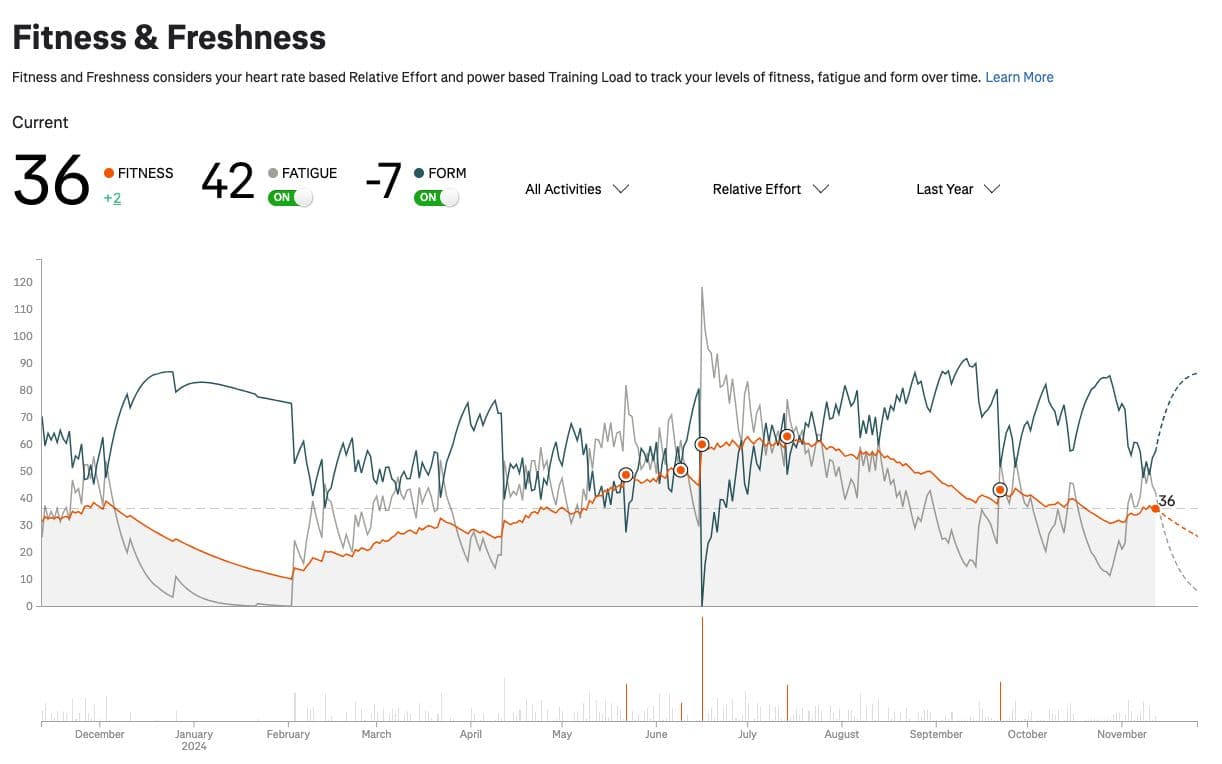
Freshness is one of the most crucial yet often disregarded metrics in our training regimes. Some of you may be familiar with this concept from Strava's Fitness and Freshness chart. I have recently taken the time to master it and am amazed by how effective it is to follow the principles of Fitness, Fatigue, and Form.
Even more revealing, this insight has helped me identify exactly where and why I burned out in my recent training.
Tools like Garmin, Whoop, and Oura are fantastic for tracking these metrics, but their true value shines when we use the data to make informed training decisions. Simply put, knowing when to push and when to rest can dramatically boost both performance and overall health.
It is important to remember that our goal is not just to reach fitness milestones but also to maintain a healthy and balanced life. Interestingly, the most significant gains often happen outside our workouts, in recovery. This is when our muscles repair, our nervous system resets, and our vitality is restored.
From my experience, there is often a lot of focus on the training itself, with less attention paid to recovery. The irony is that I have learned this over time, and as I get older, recovery has become more prevalent and necessary. With age, the recovery window naturally extends, demanding that we factor it in more deliberately.
Do we not all wish for the cellular and muscular regeneration we had at 18?
Let us get into the nitty gritty and break down Strava's Fitness and Freshness model. Something that, if I had understood sooner, might have saved me from burnout and stress injury.
Fitness reflects the cumulative effect of our training over time; it shows our overall endurance and strength in our chosen sport. Consistent training raises our fitness level, but fitness alone does not tell the full story. I used to think that quickly moving this needle up was the ultimate goal, but then I encountered Fatigue.
Fatigue is the natural weariness or strain that builds up from our workouts. It is an essential response because it indicates that our body is working and adapting. However, too much fatigue, pressing the fitness accelerator without rest, can lead to burnout, ultimately holding us back instead of moving us forward. This is where the balance comes in, and mastering this balance brings us to Form.
Form is the state we reach when fitness and fatigue align. It represents our readiness to perform at our best. High fatigue lowers our form, making us feel sluggish, less capable, and, more concerning, injury prone. When we balance fatigue with proper recovery, our form improves, leaving us feeling fresh and prepared for more intense sessions like races or threshold workouts.
Form is typically at its best for training when it is in a slightly negative to neutral range. This balance means you have accumulated some fatigue from recent workouts, indicating your body is actively adapting, but you are not overly fatigued to the point of risking burnout or injury.
Ultimately, the journey to becoming a stronger athlete is as much about knowing when to pull back as it is about pushing forward. It is easy to get swept up in the "more is better" mindset, but recovery is what truly stitches our progress together, building resilience and endurance in ways relentless training alone cannot.
Tools like Strava's Fitness and Freshness model, along with Garmin, Whoop, and Oura, do not just provide data; they empower us to tune into our bodies, revealing where we are thriving and where we are teetering on the edge.
By finding this sweet point, we are giving ourselves the gift of longevity in our sports. Commit to training smarter, showing up fresh and focused, and valuing the quiet power of recovery, the often overlooked key to truly levelling up.
Written by
Committed recreational athlete, entrepreneur, and founder of EverydayPB. Runs, cycles, and trains functional fitness with a focus on performance and recovery.
More from Darren ZwiersEnjoyed this?
Training tips, gear reviews, and race insights. Straight to your inbox. No spam.
New to endurance training or keep finding yourself injured? Here is why recovery matters more than you think, and why the no pain no gain mindset near...

My wife joined me for her first ever run. Her experience mirrored my own and, I am sure, countless others. Here is why the discomfort is normal and wh...