TrainingStarting Out
No Pain, More Gain
New to endurance training or keep finding yourself injured? Here is why recovery matters more than you think, and why the no pain no gain mindset near...
5 min readDarren Zwiers
Three years of on-off sessions finally clicked into a habit worth keeping. How stick mobility changed my running in just one month.
I'm going to be honest with you. I have been absolutely terrible at mobility work for years. Properly terrible. The kind of terrible where you buy a foam roller, use it twice, then it lives under the sofa collecting dust. I've downloaded programmes, bought resistance bands that are still in their packaging somewhere. Every single time, good intentions abandoned within a week. Sound familiar?
So when I tell you that stick mobility for runners has genuinely changed how I train and how I move, I need you to understand the context. This is coming from someone who has failed at every other mobility practice going. This one stuck. And I think I know why.
If you've heard people banging on about "mobility work" without ever really understanding what it means, here's the short version. It's about teaching your joints and muscles to move freely through their full range of motion, with control. Not just being flexible. Being strong in those stretched positions so your body can actually use that range when you run.
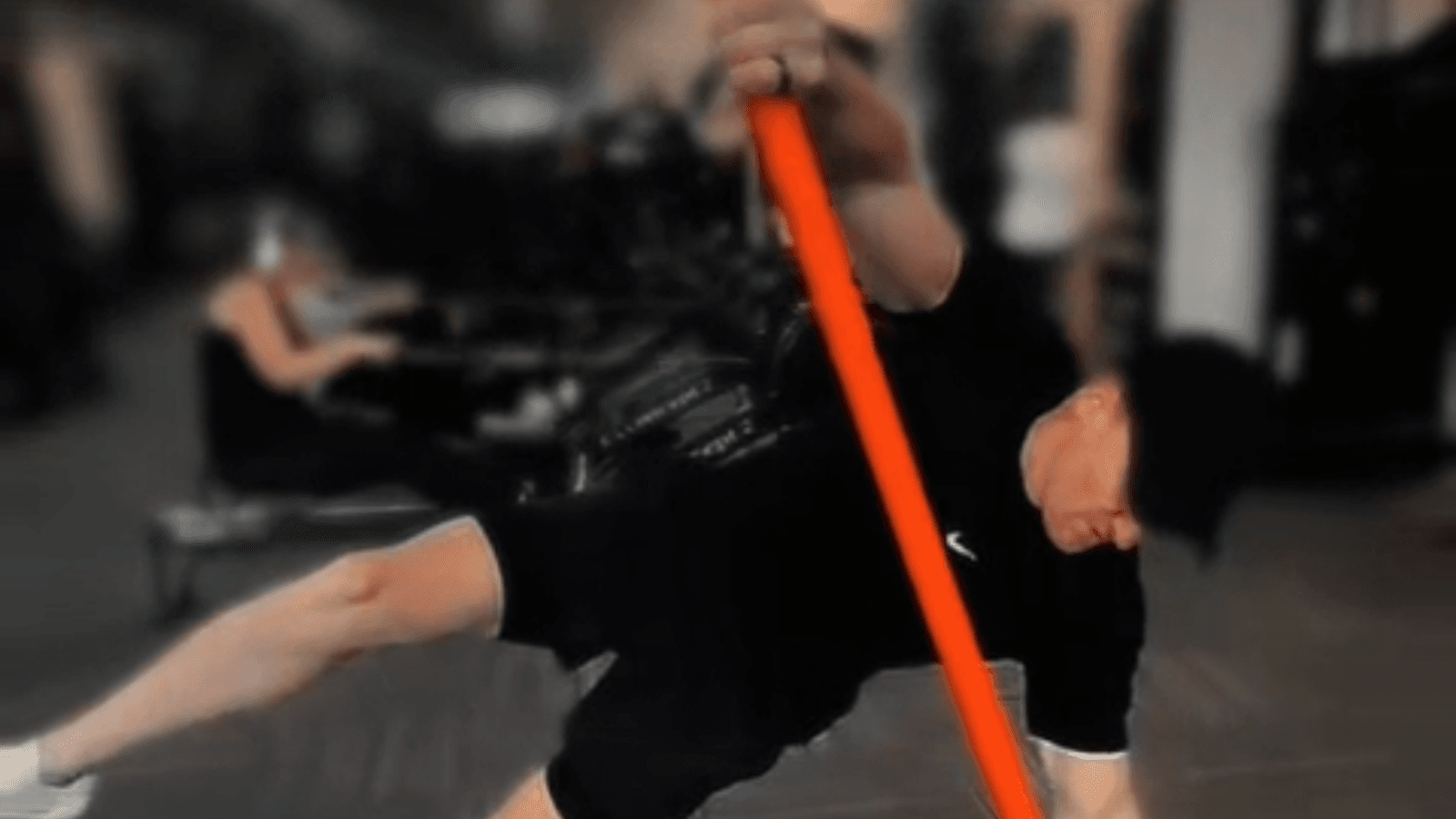
The best way I can describe stick mobility is yoga on steroids. You use long, flexible sticks to create leverage, resistance, and full-range movement that you simply cannot achieve with your body alone. It's not passive. You're not lying there waiting for something to release. You're actively working your muscles while they're stretched out. Strength training and stretching at the same time.
There's real science behind this, too. Dr. Samantha Smith, a sports medicine specialist at Yale Medicine, puts it simply: "The goal of mobility work is to give your joints freedom instead of having them be a source of restriction, and to potentially prevent muscle strains and joint soreness." Growing evidence suggests that active mobility work may be more effective for injury prevention than passive stretching alone. Your muscles don't just get longer. They get stronger at those new ranges, which means they can actually protect your joints when you're pounding out miles.
I first came across stick mobility about three years ago and used it on and off with my PT. On and off being the key words there. I'd do a session, think "that was brilliant," then not touch it again for weeks. Classic me.
About a month ago, I committed properly. Consistent sessions. Focused work. And within that first month, I could already feel a real difference in how my hips move and how my posterior chain loads through my stride. A proper, noticeable shift.
As runners, we are brilliant at putting miles in and terrible at looking after the body that carries us through them. We know we should stretch. We know we should mobilise. We just don't do it. And the stuff we do try feels boring, ineffective, or both.
Stick mobility hits different because it targets exactly the areas that runners neglect. The posterior chain. Hamstrings, glutes, calves. All of that tightness and restriction that builds up through thousands of repetitive strides. The sticks give you leverage to get into positions you couldn't reach on your own, and then they ask you to work in those positions. It's challenging. It's also incredibly satisfying.
And let's talk about injury prevention directly. When your hips are locked up and your ankles are stiff, your body compensates. Knees take load they shouldn't. Lower back picks up slack. Those compensations add up until something gives. Stick mobility attacks those restrictions before they become problems. Not a magic shield, but the closest thing I've found to proactive maintenance for a runner's body.
But the real revelation for me was the psoas work.
If you don't know what the psoas is, it's a deep hip flexor that connects your spine to your legs. One of the most important muscles for running, and most of us have absolutely no awareness of it. We sit on it all day, it gets short and angry, and then we wonder why our hips feel locked up on every run.
One stick mobility session targeting the psoas and you KNOW if yours is working or not. No guessing. You either feel it fire up and engage, or you feel this deep, stubborn tightness that tells you exactly how much work needs doing. For me, it was the latter. And that honesty is what hooked me.
Once I started unlocking the psoas and getting my deep hip flexors moving properly, everything upstream and downstream benefited. My stride opened up. My glutes started firing the way they're supposed to. It felt like finding a knot in a chain and finally untangling it.
I know what you're thinking. This all sounds great, but what do I actually do? Fair enough. Here's what a typical fifteen-minute session looks like for me on a rest day or after an easy run.
I start with standing hip circles. Stick planted on the floor for balance, drive your knee up and rotate the hip through its full range. Ten each side, slow and controlled. Then a supported deep squat hold, gripping the stick for leverage and sitting into the bottom position for 30 to 45 seconds. If your ankles and hips are tight from running, you'll feel this one immediately.
Next is the one that changed everything. The psoas lunge stretch. Back knee down, stick planted for support, drive your hips forward while the stick gives you leverage to open up that deep hip flexor. Thirty seconds each side. This is where you get honest feedback about how locked up you really are.
Then a standing hamstring sweep. Stick across your foot, hinge at the hips, and use the stick's flex to load the hamstring while it's lengthened. Not just stretching it. Working it. Twenty seconds each side.
Finish with thoracic rotations. Stick across the shoulders, feet planted, rotate through the mid-back. Runners are notoriously stiff here and it affects everything from arm swing to breathing. Ten slow rotations each way.
That's it. Fifteen minutes. Five movements. And honestly, if you only ever do one of them, make it the psoas lunge. That single exercise has done more for my running than any foam roller ever did.
Working with my PT has been massive for this. He's brilliant at spotting my compensations and guiding me into the right positions.
But you absolutely do not need a PT to start. Stick Mobility's website (opens in new tab) has free beginner videos, and their YouTube channel (opens in new tab) is full of guided sessions. Search for their "Beginners Basics" series as your starting point. The sticks start from about £95 each or £207 for the standard bundle of three (two long, one short). When you consider what we spend on trainers, GPS watches, and race entries..... it's a no-brainer.
As for when to do it, I've found it works best on rest days or after easy runs. Before a hard session, I'll do a quick five minutes of hip circles and the psoas lunge as a warm-up. The full fifteen-minute routine? That's for when your body has time to absorb it. Two or three times a week is the sweet spot.
Here's the part that surprised me most. I actually enjoy it. There's a rhythm to the movements, a focus that quiets the noise, a connection between your breath and your body that feels like what people describe about yoga. Except you're also working really, really hard.
This is proper graft. Your muscles are under tension in positions they've never been asked to hold. You'll shake. You'll discover weaknesses you didn't know existed. But you walk away feeling brilliant, not broken. Loose. Open. Ready.
For someone who runs four or five times a week, that's everything. Recovery work that complements my training, not competes with it.
If you're a runner who has tried and failed at mobility work (and let's be honest, most of us have), give stick mobility a go. Grab a pair of sticks, start with the psoas lunge and the hip circles, and commit for a month. Not a day. Not a week. A month.
Your body will thank you for it. And your running will show it.
Written by
Committed recreational athlete, entrepreneur, and founder of EverydayPB. Runs, cycles, and trains functional fitness with a focus on performance and recovery.
More from Darren ZwiersEnjoyed this?
Training tips, gear reviews, and race insights. Straight to your inbox. No spam.
New to endurance training or keep finding yourself injured? Here is why recovery matters more than you think, and why the no pain no gain mindset near...
I was supposed to line up for London to Brighton. I had trained for it, carb loaded, visualised the route. But I woke up feeling awful. For the first...