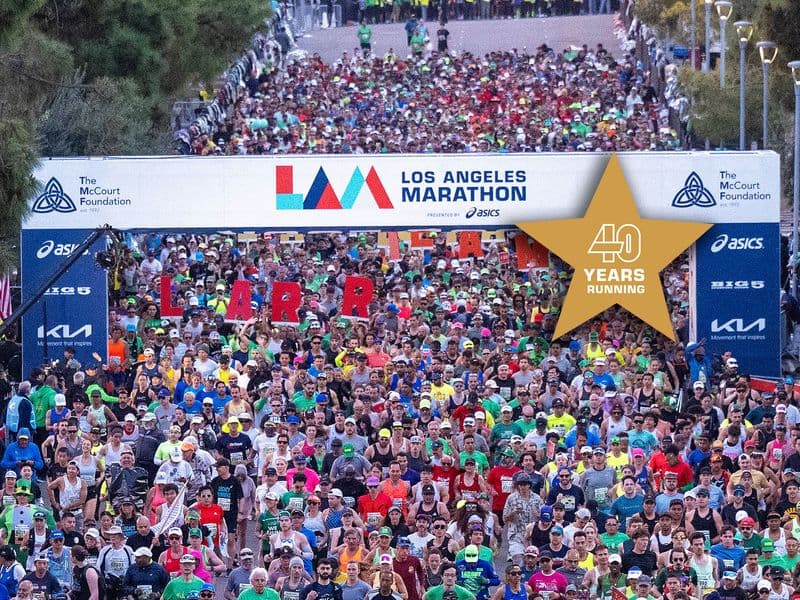
More than 241,000 runners applied to the 2026 New York City Marathon (opens in new tab). Roughly 1% of them got in. That is the lowest NYC Marathon acceptance rate ever recorded, and it tells you something important about where marathon culture is heading.
One percent. Harvard accepts nearly four times as many applicants. And yet the applications keep climbing.
When Demand Outgrows the Starting Line
Marathon running has exploded over the past decade. More people are training, more people are crossing finish lines, and more people are setting their sights on the big stages. The problem is that the stages have not grown with them.
The NYC Marathon caps its field at around 55,000 runners. That number has barely shifted. Meanwhile, the global appetite for endurance events keeps surging. The result: a lottery system that now filters out 99 in every 100 applicants.
It is not just New York. Every one of the six Abbott World Marathon Majors (NYC, Boston, London, Chicago, Tokyo, Berlin) now operates under some form of lottery or qualifier system. These are the races everyone wants. And the gatekeeping has never been tighter.
The Lottery Fatigue Nobody Talks About
The running community even has a name for it now: marathon entry lottery fatigue. Runners are now applying to five, six, sometimes ten major race lotteries every year. They track their rejection emails like a second hobby. They do the maths on their odds. They plan training blocks around races they may never get into.
This is not a healthy relationship with sport. I have had seasons where half my race planning revolved around lotteries I never won. It does something to your motivation that is hard to explain until you have experienced it.
The lottery has become its own kind of mental load. You train hard, stay consistent, do everything right. Then a random number generator decides whether your race calendar has a centrepiece this year. That disconnect between effort and access is where the frustration lives.
Does Scarcity Make It Mean More?
There is an argument that the exclusivity adds to the mystique. Getting into New York feels like an achievement before you have even laced up. The harder it is to get in, the more it means when you do.
There is something to that. But it also raises an uncomfortable question: who actually gets through the door?
Charity entries exist as an alternative pathway, but they typically cost between £2,000 and £5,000 to secure. That is a significant barrier. Runners who cannot afford that figure (or who cannot fundraise it in time) are simply locked out. The lottery is supposed to be egalitarian, but at 1% acceptance, it is closer to a lottery in the truest sense: luck, not merit.
The prestige of a World Marathon Major is real. The question worth asking is whether marathon lottery accessibility is actually improving, or whether the system simply capitalises on our passion while keeping most of us out.
Boston Is Different. That Matters.
Worth noting: the Boston Marathon still runs on time qualifiers. No pure lottery. You earn your entry by hitting a specific time standard for your age group. It is demanding, but it is transparent. The pathway is clear.
That model rewards consistent training and improvement. It gives runners a concrete goal rather than a prayer. If you want a major on the calendar, Boston is the one where your legs can earn the place your luck cannot.
The Real Opportunity: Smaller Races
The best races are not always the most famous ones. Most runners know this. Most runners forget it during lottery season.
Regional marathons offer something the World Marathon Majors often cannot: genuine community. The kind where you know the race director by name, where the spectators are locals who actually came out to support you, and where the finish-line atmosphere is electric because everyone there chose to be there.
They also cost less to enter, less to travel to, and require zero lottery luck. You register. You train. You race. The fundamentals are intact.
Some of the most memorable marathons in the world are not on the Major circuit. Scenic courses through national parks. Coastal routes. Mountain finishes. These races mean a few thousand competitors, not fifty thousand. You are not just a bib number lost in a starting wave.
These are not consolation prizes. They are often the better experience.
Your Marathon Journey Is Bigger Than a Ballot
The NYC Marathon acceptance rate hitting 1% is a signal worth paying attention to. Marathon culture is shifting. The races that were once accessible to anyone willing to train are now accessible to almost nobody through the standard pathway. That is a real change in what it means to chase a legacy race.
But that does not diminish your goals. It reframes them.
Your marathon journey does not begin when a lottery email says yes. It begins when you decide to train seriously, to show up consistently, and to race well. That can happen at any start line, anywhere in the world, with or without a six-star medal at the end.
Chase the runs that push you. Enter the races that excite you. Celebrate every finish line you cross.
The best marathon you ever run might be one that never received a single lottery application.